Medical Aid for Palestine: Dr Basil Budair
Dr Basil Budair is a consultant orthopaedic surgeon and humanitarian medic whose work spans advanced surgical care and frontline missions to Gaza. Known for his compassion, precision and service to Palestine, he supports Islamic Help’s efforts to deliver urgent medical relief where it’s needed most.
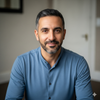

Consultant Orthopaedic Surgeon & Humanitarian Medic
Dr Basil Budair is a Consultant Orthopaedic Surgeon who combines advanced surgical skills with a strong commitment to humanitarian work. He is known for his precision, humility, and compassion, and is a trusted member of Islamic Help’s medical missions to Gaza. His expertise and caring approach have made a difference in some of the world’s most challenging medical settings. Through his work, he has become central to humanitarian healthcare efforts in Palestine, where medical needs are growing under tremendous pressure.
For Dr Budair, surgery is more than a technical skill; it is an act of service. Whether he is working in a modern UK hospital or a hospital under pressure, his goal is always to restore dignity, relieve suffering, and provide care where it is most needed. This belief shapes his clinical work and his commitment to medical relief in Gaza, where skilled surgical care is urgently needed.
A Career Shaped by Expertise and Dedication
Dr Budair built his reputation at top orthopaedic centres, where he developed expertise in treating complex foot and ankle conditions. He has cared for patients with traumatic injuries, congenital deformities, sports injuries, and long-term joint problems. He focuses on careful assessment, precise technique, and a genuine commitment to patient wellbeing.
In his roles with the NHS, private practice, and international centres, he is known for calm leadership and a collaborative approach. Colleagues describe him as measured, skilled, and very reliable. He brings clarity and calm to every surgery, no matter how complex.
What sets him apart is not just his technical skill, but his belief in treating the whole patient. Since the start of his career, he has focused on rehabilitation, recovery, and long-term results, working closely with physios, nurses, pain teams, and rehabilitation specialists to provide ongoing care. This team-based approach is especially valuable in humanitarian settings, where resources are limited, and teamwork is crucial, especially in Gaza’s fragile healthcare system.
Choosing to Serve Beyond the Hospital Walls
Dr Budair’s career in orthopaedic surgery is impressive, but his humanitarian work is among its most important aspects. Motivated by a sense of duty to people living in conflict, he has joined Islamic Help on missions to Gaza during times of great need. These trips, focused on providing urgent healthcare and trauma surgery, have taken him to some of the hardest-hit areas in Palestine.
Humanitarian surgery demands a special kind of resilience. Doctors work in places affected by attacks, with limited supplies, and treat patients with serious injuries. They must stay focused despite many challenges. In these situations, Dr Budair’s character stands out the most.
He has worked in hospitals where each day brings new challenges, such as mass-casualty events, complex limb injuries, crush trauma, burns, fractures, and patients who have waited too long for care. Many patients arrive in pain, scared, and tired. In these situations, his experience in complex surgery is crucial, helping Gaza healthcare teams who work tirelessly under tremendous pressure.
During his missions in Gaza, Dr Budair has:
- Assisted in emergency theatres overwhelmed by casualties.
- Supported local surgeons through high-pressure trauma cases.
- Treated blast injuries, crush wounds and limb damage requiring delicate reconstruction.
- Assessed damaged medical facilities and helped identify urgent clinical needs.
- Offered guidance on long-term orthopaedic rehabilitation in a system under strain.
Even in chaotic and stressful situations, he stays calm, steady, and focused on the patient in front of him. Both colleagues and patients respect this quality.
Part of Islamic Help’s Trusted Medical Team
Islamic Help often refers to Dr Budair as “our surgeon,” highlighting his reliability, dedication, and readiness to help when needed. He joined one of the first surgical teams allowed into Gaza after a ceasefire, arriving when hospitals were overwhelmed and short-staffed. The mission was complex and unpredictable, but his main goal was clear: to provide care where it was needed most.
During these missions, he worked closely with Palestinian medical teams who faced extreme challenges. There is evident mutual respect between Dr Budair and the local doctors, built on teamwork and a shared commitment to helping patients in harsh conditions. His involvement has strengthened ongoing humanitarian medical missions, supported long-term aid for Palestine, and highlighted the critical role of specialist surgeons in conflict zones.
Outside the operating theatre, he has also been an important advocate. Through Islamic Help’s Meet the Medics of Gaza events and public talks, he has shared what healthcare is really like in conflict zones, helping supporters see why ongoing medical relief in Gaza matters. His reflections give a rare and honest look at what doctors face on the ground, including the emotional strain, moral challenges, and strong sense of duty that bring them back.
A Mentor, Teacher and Advocate for Better Care
Alongside his clinical and humanitarian work, Dr Budair is also a committed teacher. He mentors medical students and junior doctors, helping them learn both surgical skills and the values behind compassionate care. His teaching is based on real experience and the belief that empathy is as important as technical skill in surgery.
Colleagues often mention his supportive nature. He is a steady presence who encourages others, listens carefully, and leads by example. These qualities are essential in humanitarian work, where younger clinicians and volunteers look to senior surgeons for guidance and support.
A Surgeon Defined by Integrity and Humanity
Today, Dr Basil Budair continues to balance his clinical skills with his humanitarian responsibilities. His work in Gaza, along with his experience in major UK and international hospitals, has shaped him into a surgeon known for both technical excellence and deep compassion.
He is known not just for the surgeries he performs, but for the dignity he helps restore to patients, whether they are recovering from complex orthopaedic problems or the trauma of conflict. His work in humanitarian healthcare and medical relief in Gaza continues to support Palestine’s most vulnerable communities.
For Islamic Help, he is a respected partner in medical relief.
For colleagues, he is a steady and trusted presence.
For the people he has treated in the most challenging situations, he represents hope, care, and humanity.
Frequently Asked Questions (FAQs)
Why is medical aid crucial in Gaza and Palestine during conflicts?
Medical aid is crucial in Gaza and Palestine because the conflict severely damages hospitals and causes many injuries. External aid provides much-needed medical supplies, expertise, and emergency care to save lives and treat illnesses in a region where local resources are often overwhelmed or unavailable.
How do organisations deliver aid to Gaza despite blockades and conflict?
Delivering aid to Gaza is complex due to blockades and ongoing conflict. Organisations must coordinate with multiple partners, negotiate access, and manage complex logistics to bring critical medical supplies and personnel into the region despite restrictions and security challenges.
What medical services are most needed in Gaza during crises?
Emergency surgery, trauma care, pediatric services, and chronic disease treatment are the most urgent medical needs in Gaza during crises. High casualty numbers and damaged infrastructure put enormous pressure on hospitals, which struggle to meet essential healthcare demands.
How can the public support medical humanitarian efforts in Palestine and Gaza?
The public can support medical humanitarian efforts in Palestine and Gaza through donations, advocacy, awareness-raising, and volunteering. Supporting credible organisations ensures funding and resources reach people in need amid ongoing conflict and humanitarian crises.
What ethical considerations guide medical care in conflict zones like Gaza?
Ethical medical care in conflict zones like Gaza requires impartial treatment, respect for patient rights, and prioritising safety. Health workers must navigate these principles even amid violence, adhering to international humanitarian law and medical ethics to provide unbiased care.
How do healthcare workers cope with trauma and stress in war zones?
Healthcare workers cope with trauma in war zones through peer support, counselling, and resilience training. These resources help them manage stress and psychological impact, enabling them to continue delivering critical care despite the emotional and physical demands of working in conflict settings.