Inside Deployment 4: Two Weeks of Life-Saving Surgical Support in Gaza
Islamic Help’s fourth emergency medical deployment to Gaza brought life-saving trauma care, specialist surgeons, and vital humanitarian healthcare to European Gaza Hospital during two intense weeks of conflict-zone medical work.

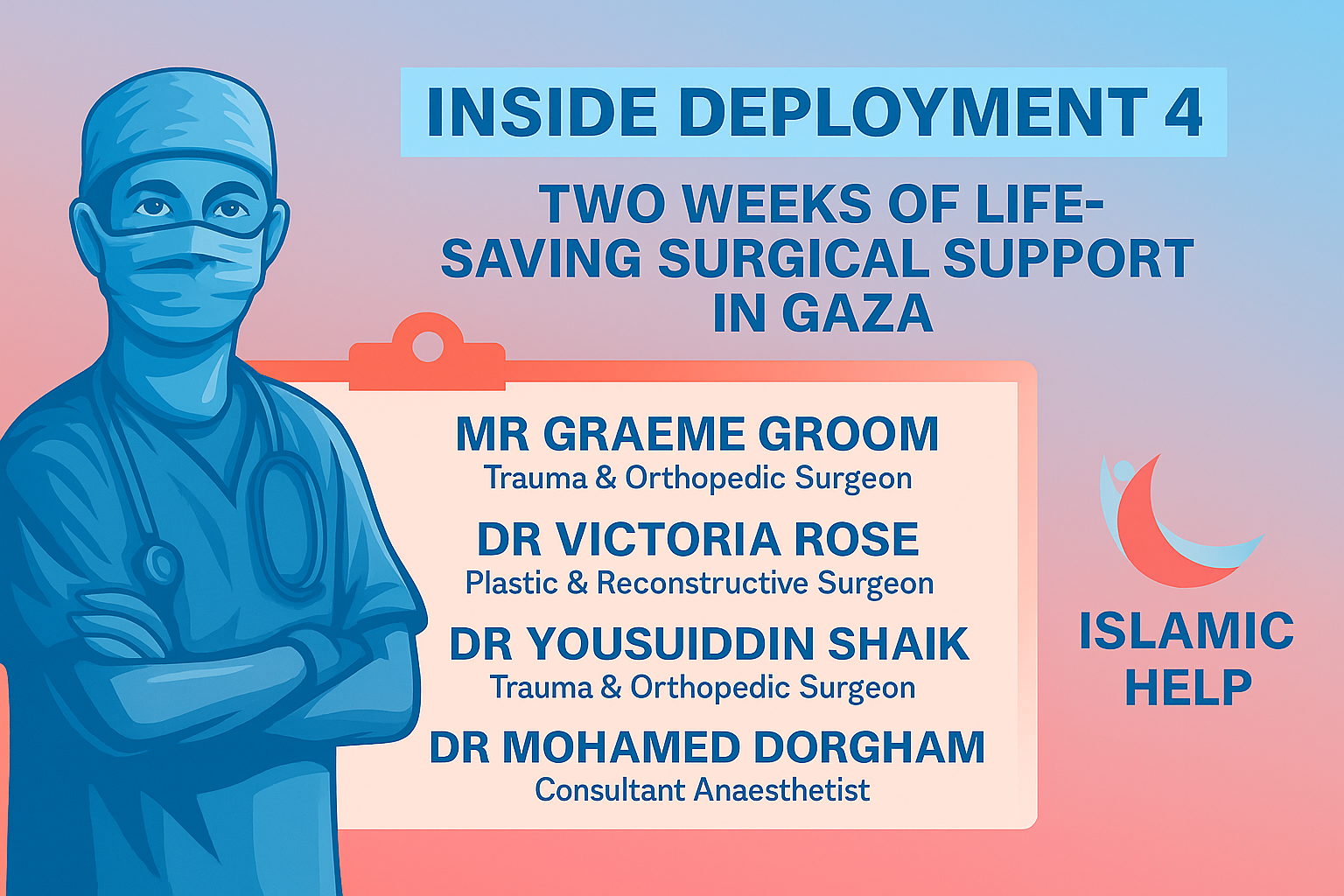
In March 2024, Islamic Help launched its fourth emergency medical mission to Gaza, demonstrating our commitment to healthcare and support for Palestine. Four skilled UK consultants joined a busy hospital in the region. They provided crucial medical help during a critical time. In a conflict zone, quick and expert care can save lives.
From March 25 to April 8, 2024, our doctors worked for 14 days at the European Gaza Hospital in Khan Younis. Their main goal was to improve trauma care and support their tired Palestinian colleagues. They also aimed to treat as many critically injured patients as they could. With Gaza’s healthcare system under tremendous stress, their presence provided important stability and emergency medical help.
This mission was a key part of Islamic Help’s ongoing medical relief in Gaza, where hospitals remain under tremendous pressure. Below, we share what the team accomplished, the challenges they faced, and the lessons learned as we continue to support Palestine with hands-on help.
Who Was on the Mission?
Islamic Help’s Deployment 4 team included four senior UK consultants, each with specialist skills in trauma, reconstructive care, and anaesthesia. These areas are essential in conflict-zone medicine:
- Mr Graeme Groom – Consultant Trauma & Orthopaedic Surgeon
- Dr Victoria Rose – Consultant Plastic & Reconstructive Surgeon
- Dr Yousufuddin Shaik – Consultant Trauma & Orthopaedic Surgeon
- Dr Mohamed Dorgham – Consultant Anaesthetist
Together, they offered advanced surgical care in a hospital system overwhelmed by a large number of trauma injuries. Their contribution reinforced Gaza’s limited pool of specialist doctors, which is vital to Gaza's long-term healthcare resilience.
Mission Objectives
Deployment 4 aimed to meet the urgent needs of Gaza’s overstretched health system, where humanitarian healthcare was essential:
- Provide specialist orthopaedic and plastic surgical support as hospitals struggled with a surge in trauma cases.
- Support local surgical teams who were exhausted, overstretched and working with severe shortages of equipment.
- Treat patients with major limb injuries and complex trauma, including those needing revision or reconstructive surgery.
- Improve care at European Gaza Hospital, where daily shortages of instruments, supplies, and operating rooms created constant challenges.
- Help reduce pressure on local staff, especially after losing key surgeons who were no longer available, including one who had been arrested.
This deployment was fully funded and approved, allowing the medical team to enter Gaza without delay and provide continuous emergency care. The team completed a large amount of urgent surgical and clinical work, a clear reflection of the overwhelming demand for medical relief in Gaza.
Services Provided
- Inpatient Consultations: 161
- Major Surgical Procedures: 98
- Minor Surgical Procedures: 28
- Nerve Blocks: 0
- Referrals/Transfers: 4
These numbers show the team worked quickly, handling complex trauma cases every day despite limited time, equipment, and space. The high number of surgeries underscores the importance of frontline medical missions in stabilising patients and saving lives in Palestine.
Support Life-Saving Medical Work in Gaza
Our teams can only continue delivering trauma surgery, emergency medical aid, and humanitarian healthcare with your support.
Please help us send more medical missions to Gaza.
Conditions Inside EGH
The mission took place during Ramadan, which changed the hospital schedule and added extra pressure on both local and visiting teams. Working hours often lasted from 9:00 am to 2:00 am, and sometimes even later. Despite the intense timetable, the surgical workload remained consistently high. Patient prioritisation became increasingly complex as new emergencies arrived every day, a reflection of the unrelenting demands placed on Gaza healthcare during the ongoing conflict.
The team relied on local colleagues, many of whom were also overwhelmed but still helped whenever possible. Their resilience and dedication are a strong example of supporting Palestine through teamwork and shared responsibility.
Challenges Faced During Deployment 4
Like other missions to Gaza, Deployment 4 faced several logistical and operational challenges that are common in conflict-zone medicine:
1. Delays in Theatre Readiness
Damage to infrastructure and a few operating rooms often caused delays before surgeries could begin.
2. Limited Equipment and Emergency Kits
The hospital lacked pre-stocked emergency kits, which slowed response times to critical cases and underscored the ongoing need for medical relief in Gaza.
3. Scheduling Conflicts With Larger NGOs
Near the end of the mission, a prominent NGO requested exclusive use of all four operating rooms.
This nearly resulted in the cancellation of essential yet urgent operations planned by our team, even though the NGO’s procedures were non-urgent.
As a result, hospital management faced significant pressure.
4. Coordination Challenges
Coordinating schedules in an already stretched system made it hard to plan surgical lists each day.
Humanitarian Impact
Despite these challenges, the mission helped stabilise trauma care at EGH. The surgeries prevented amputations, reduced long-term disability, and supported hundreds of patients with serious injuries. These results show what adequate humanitarian healthcare and frontline medical missions can achieve.
Having the extra consultant surgeons gave much-needed relief to local teams who had worked for months without a break. Their presence also helped maintain continuity of care, making sure medical support in Gaza continued after the mission ended. Missions & Follow-Up
The team strongly recommended continued deployments:
“Future missions are strongly advised. The surgical burden remains overwhelming.”
Plans for more medical missions are already under review, aiming to keep care going and continue support for Gaza’s hospitals. Islamic Help remains committed to providing long-term emergency medical aid in Palestine.
It is not yet confirmed if the same consultants will return, but all have said they are willing to join future missions if needed, demonstrating their dedication to saving lives in Gaza.
Lessons Learned for Future Deployments
Each deployment strengthens Islamic Help’s medical strategy in Gaza. Several key lessons came from Deployment 4:
- Robust logistical planning is essential to minimise delays in theatre readiness.
- Stronger, more precise coordination with local partners ensures continuity after visiting teams leave.
- Pre-deployment preparation of emergency kits would significantly speed up trauma responses.
- Improved scheduling systems could prevent clashes with incoming NGOs and help hospitals prioritise urgent care.
These lessons are now guiding future missions, helping Islamic Help provide even better humanitarian healthcare and on-the-ground medical support in conflict zones.
A Continuing Commitment to Gaza
Deployment 4 is just one part of Islamic Help’s long-term medical work in Palestine. With hospitals still overwhelmed and trauma care under great strain, our commitment remains strong.
Thanks to our specialist volunteers and the generosity of our supporters, we continue to stand with the people of Gaza. We provide life-saving medical care where it is needed most, strengthen Gaza’s healthcare, and deliver sustainable medical relief every step of the way. Inside Deployment 4: Two Weeks of Life-Saving Surgical Support in Gaza.
Stand With Gaza. Help Us Save More Lives.
Islamic Help remains committed to supporting Palestine with ongoing medical missions, trauma care, and frontline humanitarian healthcare.
Your donation today ensures our doctors can return, treat more patients, and strengthen Gaza’s healthcare system.
Donate to Gaza Medical Relief.
Frequently Asked Questions (FAQs)
What is a medical mission in Gaza?
A medical mission in Gaza involves volunteer doctors and nurses providing urgent care, surgeries, and specialist treatments to civilians affected by conflict, especially when local healthcare is under severe strain or in the aftermath of a disaster.
Why is trauma care so crucial in Gaza?
Trauma care is vital in Gaza due to frequent conflict-related injuries, such as blast and gunshot wounds. Quick treatment reduces the risk of death, amputations, and lifelong disability for victims, especially during large-scale emergencies.
What challenges do humanitarian doctors face in Gaza?
Doctors working in Gaza hospitals contend with damaged infrastructure, shortages of medicines, exhausted local staff, and difficulties coordinating resources amid constant security risks and high patient demand.
How do NGOs coordinate emergency medical aid in conflict zones?
NGOs coordinate by collaborating with local health authorities and international partners, joining response clusters, and sharing resources to ensure care delivery is organised, efficient, and reaches those most in need.
What types of care do medical missions provide?
Medical missions deliver a range of services, including emergency surgeries, reconstructive surgery, maternal and child health support, psychological help, and disease prevention, such as vaccinations, depending on current needs.
How are injured patients in Gaza referred for advanced care?
If specialised treatment isn't available locally, the Gaza Ministry of Health and organisations such as the WHO coordinate referrals and transfers. However, these referrals are difficult and often delayed due to restrictions and high demand.